


A gust can push a campervan off line long before rollover becomes the main concern. There’s no single wind-speed figure that determines whether it’s safe: risk depends on the vehicle’s height and profile, how it’s loaded and positioned, and how exposed the road or pitch is. Learning how to stop a campervan swaying in crosswinds starts with reducing wind exposure and keeping the vehicle stable.
If you’ve felt the steering change as a gust hits, that unease is understandable. Strong winds can affect a campervan both on the move and when parked in an exposed spot, so the right response depends on what’s causing the movement.
This guide explains how to secure your campervan, position heavy items and judge when it’s safer to stop travelling. It also covers rollover risk and suspension-related signs that may point to a handling issue, helping you distinguish weather-related movement from a problem that needs attention.
Key Takeaways
- Stow exposed equipment and choose a sheltered, level parking spot to reduce the effect of gusts.
- Keep heavy loads low and close to the vehicle’s centre, rather than placing them at the rear.
- Judge rollover risk by considering the vehicle’s profile, load and exposure, not wind speed alone.
- Notice whether swaying persists beyond gusty conditions, as it may point to suspension or load-support issues.
1. How to secure a caravan or motorhome in strong winds?
Crosswinds push against a vehicle’s side, causing it to move or pull off line. A tall, boxy motorhome or campervan presents more surface to gusts than a lower-profile car, so the effect can be more noticeable. Caravans also catch side winds, and their movement can be affected by the tow vehicle and road conditions. Vehicle height, shape and exposure all influence stability.
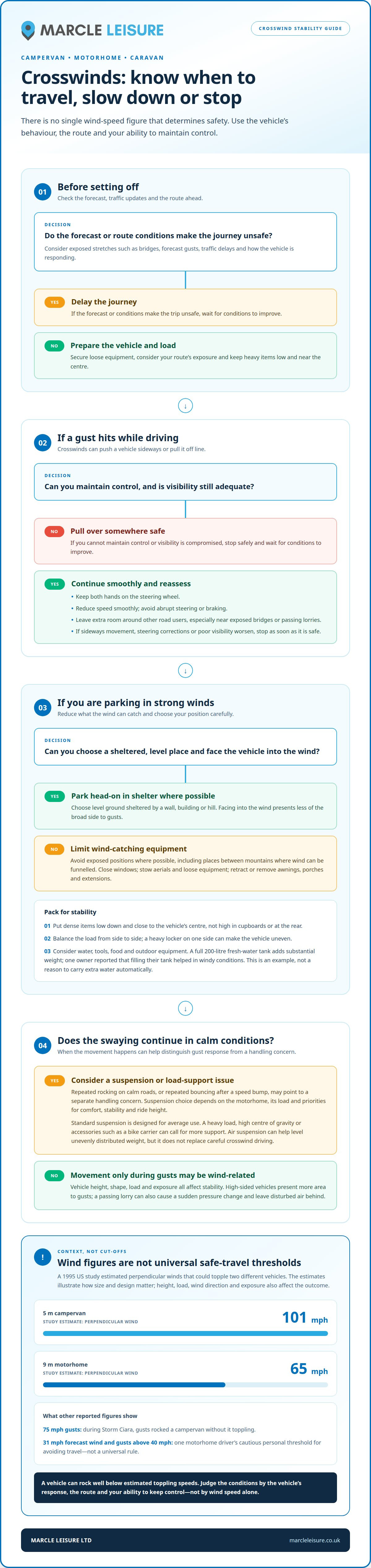
If a gust pushes your campervan sideways, keep both hands on the steering wheel, reduce speed smoothly and avoid abrupt steering. Leave extra room around other road users, especially where a slipstream or exposed bridge could intensify the movement. If you can’t maintain control or visibility is compromised, pull over somewhere safe and wait for conditions to improve.
Before strong winds arrive, close windows and stow aerials and other loose equipment. Retract or remove awnings, porches and extensions, which can catch the wind and strain the vehicle. For a parked motorhome or caravan, choose level ground sheltered by a wall, building or hill where possible. Face the vehicle into the wind rather than parking at an angle, and avoid positions between mountains where wind can be funnelled. Taking steps to secure a parked vehicle may help limit its movement in strong winds.
Choose suspension to suit the motorhome, its load and your priorities for comfort, stability and ride height. Standard suspension is designed for average use, so a heavy load, high centre of gravity or accessories such as a bike carrier can call for more support. Air suspension can help level a motorhome when its weight is unevenly distributed, but it doesn’t replace careful driving in crosswinds. The right setup depends on how the vehicle is used and loaded.
When towing a caravan, side winds, passing lorries and poorly maintained roads can all contribute to sway. Control hitches and stabiliser bars can help counter movement, but they don’t make unsafe conditions safe. Before travelling, check that the caravan and tow-vehicle tyre pressures match their recommended levels.
2. Positioning heavy items near the centre of the vehicle
Where you pack affects the vehicle’s centre of gravity and stability. Put dense items low down and close to the centre, rather than high in cupboards or at the rear. This reduces the leverage side winds can exert and helps limit rocking when a gust hits. Balance the load from side to side, too: a heavy locker on one side can leave the vehicle uneven before the wind starts pushing.
Think about the position of water, tools, food and outdoor equipment before setting off. A 200-litre fresh-water tank can add substantial weight when full, and one motorhome owner reported that filling their tank helped in windy conditions. Treat that as an example, not a reason to carry extra water automatically: account for the vehicle’s load and place necessary heavy items centrally and low.
High-sided vehicles are more exposed because their broad sides give gusts a larger area to push against. A passing lorry can cause a sudden pressure change as it approaches and passes, then leave disturbed air behind. Keep a steady line and leave room for movement; avoid sharp steering corrections if the vehicle is nudged. The same turbulence can affect a caravan and its tow vehicle, so smooth, measured driving matters.
When parked in strong winds, positioning the vehicle head-on to the wind presents less of its broad side to the gusts. This can reduce the force acting across the body, though it cannot remove the risk in extreme conditions. Rollover estimates show why vehicle size matters: a 1995 US study estimated perpendicular winds of 101 mph could topple a 5 m campervan, while 65 mph could topple a 9 m motorhome. These are study estimates, not a universal threshold; height, load, wind direction and exposure all affect the outcome.
3. Wind speeds that could topple a camper van
There isn’t one wind speed that predicts when every campervan will topple. Risk changes with vehicle height, shape, load, wind direction and exposure. A 1995 US study estimated that perpendicular winds of 101 mph could topple a 5 m campervan, while 65 mph could topple a 9 m motorhome. These estimates illustrate how size and design matter; they aren’t safe driving thresholds.
A parked vehicle can still rock well below those estimated speeds. During Storm Ciara, gusts of 75 mph rocked a campervan, showing that severe movement can occur without toppling. One motorhome driver avoids travelling when forecast wind speed reaches 31 mph and gusts exceed 40 mph. Treat this as a cautious personal threshold, not a universal rule for every vehicle or route.
In strong crosswinds, reduce speed to give yourself more time to respond to gusts. Keep both hands on the wheel, hold a steady course and avoid abrupt steering or braking. Leave extra distance from other traffic, since a sudden movement or stop needs room. Smooth driving helps preserve control, but speed alone cannot remove the wind’s force.
Before travelling, check the weather forecast, plan your route and review traffic updates or delays. The UK Government advises drivers to plan ahead using weather and traffic information. Consider whether your route includes exposed stretches, such as bridges, where gusts may hit harder. If the forecast or conditions make the journey unsafe, delay it. If control or visibility deteriorates en route, pull over somewhere safe.
Choose a sheltered stopping place rather than continuing into worsening weather. A forecast provides useful context, but the vehicle’s response matters too. Persistent steering corrections, strong sideways movement or difficulty holding your lane are clear reasons to stop driving as soon as it’s safe. When severe weather makes touring exhausting, heading back to home comforts—such as a quality sofa or supportive bed from sheepbridgesofasandbeds.com—is often the most sensible and relaxing choice.
4. Common suspension-related instability and swaying
Understanding how to stop campervan swaying in crosswinds starts with noticing when the movement happens. A vehicle that shifts only during gusts may be reacting to wind; one that keeps rocking on calm roads may have a separate handling concern. For example, repeated bouncing after a speed bump can indicate that the suspension is taking time to settle. Note whether the movement changes with passengers, luggage or other loads.
Shock absorbers control suspension compression and rebound. If they don’t manage that movement effectively, the body can take longer to return to its neutral driving position after a bump or change of direction. Uneven ride height is another useful clue: a motorhome sitting lower on one side may have unevenly distributed weight. These symptoms don’t identify a single fault, but they can help distinguish persistent instability from occasional wind movement.
Air suspension can allow separate left- and right-side pressure adjustments, helping level a motorhome when its layout or load leaves it uneven. Choose suspension with the vehicle type, weight, load and priorities for comfort, stability and ride height in mind. If you’re considering how to stop campervan swaying in crosswinds, remember that suspension can support levelling and handling, but it can’t remove the force of a gust.
Stabilisers and control hitches relate to caravan movement between the caravan and tow vehicle, rather than suspension faults in a motorhome. For a motorhome that remains unsettled in calm conditions, the useful next step is to assess its load and suspension behaviour together. Explore suspension options with Marcle Leisure Ltd as part of that assessment.
Marcle Leisure
Marcle Leisure Ltd supplies air suspension solutions for motorhomes, including Air Suspension Kits, pneumatic components and airbags for suspension. These options may be relevant when persistent rocking, uneven ride height or a heavy load points to suspension support as part of the handling concern. The right setup depends on the motorhome and how it’s used, so consider its weight, load distribution and desired ride height together.
Suspension equipment can support levelling and help manage movement, but it can’t prevent crosswinds or make severe weather safe. If the vehicle sways only during gusts, focus first on safe driving and sheltered parking. If unsettled handling continues in calmer conditions, suspension components may be worth considering as part of the wider picture.
Contact Marcle Leisure to discuss air suspension kits and components for your motorhome.
Make confident decisions before your next journey
Put what you’ve learned about how to stop campervan swaying in crosswinds into a routine that suits your vehicle. Before setting off, note how it handles with its usual load and watch for new rocking, leaning or changes in steering. This gives you a useful point of comparison when conditions or the vehicle’s setup change. If unsettling movement continues in calm weather, treat it as a handling issue worth investigating rather than assuming every symptom comes from wind. For motorists embarking on extended touring or retirement adventures, peace of mind also involves getting broader affairs in order, where firms such as Massingill Attorneys & Counselors at Law highlight the value of clear business law and estate planning.
Confidence comes from knowing when to continue, adapt your driving or stop somewhere safe. Keep that judgement central to every trip, and make suspension advice part of the next step if the vehicle’s behaviour has changed. Contact Marcle Leisure Ltd for advice about your motorhome’s suspension needs. A considered setup and a careful approach can help you prepare for the road ahead with greater confidence.
Frequently Asked Questions
Can my campervan blow over?
Yes, a campervan can be at risk of toppling in sufficiently strong, exposed crosswinds, but no single wind-speed threshold applies to every vehicle. A tall body, uneven loading, the direction of the gust and the surface beneath the tyres all affect stability. If a parked van is rocking heavily, move away from exposed ground if safe or seek shelter rather than staying beside it.
How do I secure a caravan or motorhome in strong winds?
Start by securing anything that can catch the wind: retract the awning and stow loose exterior equipment. At a campsite, choose a level, sheltered pitch and position the vehicle with its front facing the wind. If the vehicle is already rocking, avoid climbing onto the roof or handling loose equipment in exposed conditions. Prioritise moving to shelter if the pitch becomes unsafe.
What wind speed can a motorhome withstand?
There is no dependable maximum wind speed for every motorhome. A shorter, lower vehicle and a taller motorhome respond differently, while wind direction, gust strength, load and shelter also matter. A forecast figure can’t guarantee how a particular vehicle will behave. Pay attention to actual movement and steering control, and treat pronounced rocking while parked as a reason to seek a safer position.
Why optimise your motorhome’s suspension system?
A suitable suspension setup can help a motorhome sit level and manage movement under its particular load. Separate left- and right-side air-pressure adjustments, for example, can help correct an uneven stance caused by the vehicle’s layout or weight distribution. Suspension won’t eliminate crosswind forces. Consider the vehicle type, load, ride height and whether unsettled handling continues on calmer roads.
What causes a campervan to sway in crosswinds?
Side gusts push against a campervan’s body and can nudge it from its intended path. The effect may be more noticeable alongside a high-sided lorry, on an exposed stretch or where the road surface is poor. If movement occurs only during gusts, weather is a likely influence; if it also happens on calm roads, load balance or suspension may be contributing.
What speed should you drive a campervan in crosswinds?
There is no single safe speed for every campervan in crosswinds. Choose a speed that gives you time to respond to gusts and reduces the need for abrupt steering, while accounting for visibility, road conditions and traffic. Keep both hands on the wheel and don’t try to maintain normal motorway speed if the vehicle feels unsettled. Pull over safely if you can’t hold your course.