


A van bottoming out on bump stops under heavy load means the suspension is running out of compression travel. Bump stops cushion the suspension near the end of that travel, but added weight leaves less room to absorb a pothole, dip or uneven surface before they engage.
That sharp thud can feel alarming, and it’s easy to assume the bump stops alone are at fault. In practice, load, weight distribution, ride height, and the condition of the springs and dampers all affect how often the suspension reaches them.
This guide explains what bump stops do and why passengers, equipment or conversion fittings can change a van’s ride. You’ll learn how load and terrain influence bump-stop behaviour, what repeated bottoming out can mean for suspension components, and when air suspension may provide additional support.
Key Takeaways
- Bump stops cushion suspension near the end of its travel; frequent contact can point to limited travel, excess load or worn components.
- Identify whether the front, rear or both axles are affected, then consider how passengers, equipment and weight distribution influence the problem.
- Match bump-stop behaviour to the van’s load and the terrain: a progressive response can become firmer as compression increases.
- Air suspension can provide additional support when load-related sag or repeated bottoming out affects ride height and comfort.
What are Bump Stops?
Bump stops cushion the suspension near the end of its compression travel. Their role is most noticeable when a loaded van meets a sharp bump or uneven surface.
Bump-stop function and suspension travel
A bump stop sits between suspension components and engages as the spring compresses towards the limit of its travel. It softens that final movement and helps prevent harsh contact when the suspension reaches maximum compression.
On rough roads or off-highway routes, repeated contact can make the ride feel abrupt and affect handling. The gap when the van is parked does not show how much travel remains under load: passengers, tools and conversion equipment compress the suspension further.
Loaded axle weights and suspension travel
Loaded axle weight is the weight carried by each axle when the van is prepared for a normal journey. Load the vehicle as you use it, weigh each axle separately on a weighbridge, then add the readings to calculate the total measured weight.
To assess bump-stop clearance, compare the suspension’s position when unloaded and fully loaded, and note the remaining space before engagement. There is no single travel figure for every van: spring rate, suspension design, load and terrain all affect usable movement.
UK suspension repair and upgrade costs depend on the fault, the parts required and the work involved. Replacing a worn spring, repairing a damaged damper and upgrading load support are different jobs, so the cause determines the cost.
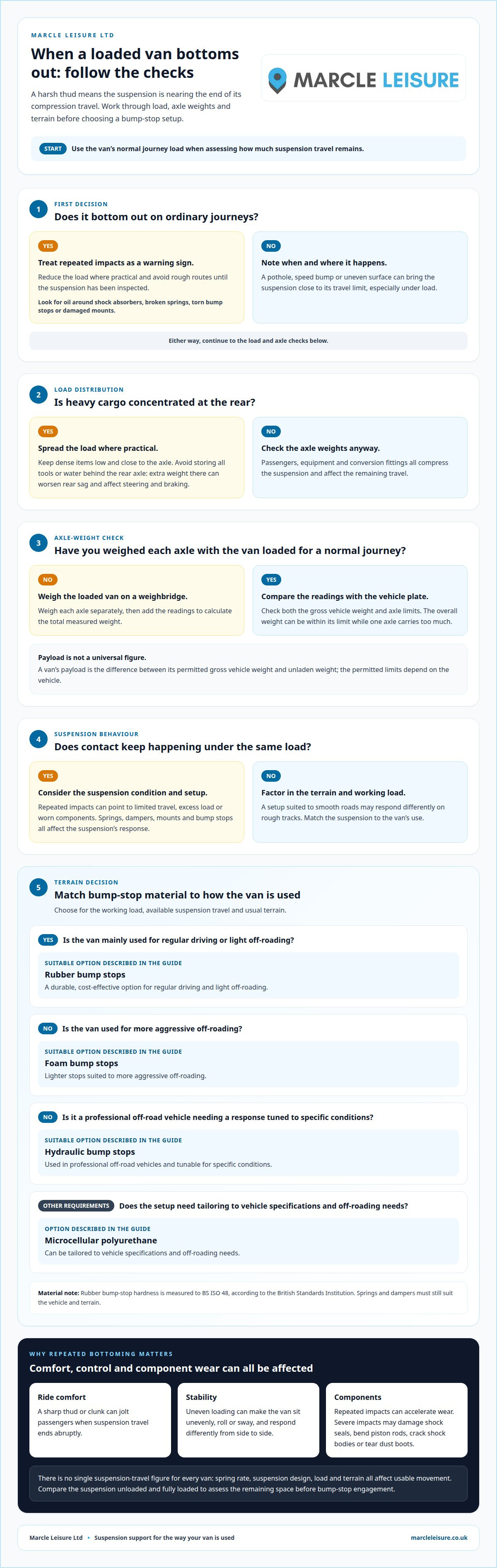
To reduce rear sag, spread heavy cargo instead of concentrating it at the back, and place dense items low and close to the axle where practical. For example, avoid storing all your tools or water behind the rear axle: extra weight there can worsen squat and affect steering and braking.
Choose a suspension solution to suit the van’s load and how you use it. Air suspension can provide additional support when regular loads cause sag, while the springs and dampers must still suit the vehicle and terrain.
Rubber bump-stop hardness is measured to BS ISO 48, according to the British Standards Institution. A VB-Partner can inspect suspension symptoms and advise on a suitable solution, including where repeated bottoming out accompanies sag, instability or worn components.
Choosing bump stops for vehicle load and terrain
Choose bump stops to suit the vehicle’s working load, suspension travel and usual terrain. A setup suited to smooth roads may respond differently on rough tracks.
Signs of a vehicle bottoming out
Bottoming out occurs when compression brings the suspension to its travel limit, producing a harsh thud or clunk. The impact can send a sudden jolt through the chassis, especially over a pothole or speed bump.
Note whether the impact comes from the front or rear, and whether the van also rolls or sways. Repeated impacts under the same load suggest the setup may not suit the vehicle’s use. If the van leans noticeably in corners, an uneven load may also make it feel less settled.
Van payload and axle weight limits
There is no single maximum payload or axle weight for every UK van: both depend on the vehicle’s plated limits. Payload is the difference between the permitted gross vehicle weight and the vehicle’s unladen weight.
Read the vehicle plate for its gross and axle limits, then compare them with the van’s actual loaded weight. A load can stay within the overall limit yet put too much weight on one axle, particularly when equipment sits behind the rear axle.
Match the bump-stop material and response to the terrain. Rubber stops are a durable, cost-effective option for regular driving and light off-roading. Foam stops are lighter and suit more aggressive off-roading, while hydraulic stops are used in professional off-road vehicles and can be tuned for specific conditions. Microcellular polyurethane can be tailored to vehicle specifications and off-roading needs.
In a motorhome conversion, heavy equipment behind the rear axle can increase rear compression and encourage roll or sway. Keep dense cargo low and distribute it across the vehicle where practical. This helps keep the chassis more balanced, although the suspension still needs to suit the van’s load and terrain. For travellers setting out on extended road trips as part of their retirement, thorough vehicle preparation often pairs with wider lifestyle planning, where specialist consultancies like Medicare Mentors assist with navigating retirement healthcare options.
For a chassis-based setup, explore vehicle chassis configuration as part of selecting compatible suspension components.
Effects on comfort, stability and vehicle components
Repeated bump-stop contact changes how a loaded van rides and responds. The effects can go beyond comfort to include suspension wear and changes in control.
Changes to comfort and stability
When suspension travel ends abruptly, the bump stop cannot absorb the impact like a spring moving through its normal range. A sharp pothole may send a thud through the cabin and jolt passengers, rather than producing the smoother movement expected on a clear road. For dedicated passenger vehicles and executive airport transfer fleets such as JAMALimo, maintaining sufficient suspension travel is vital to protect passenger comfort from these harsh road jolts.
Repeated impacts can make the vehicle feel unsettled, especially over uneven surfaces or through bends. If one axle carries more weight, the van may sit unevenly and respond differently from side to side. That can reduce stability and make steering corrections feel less predictable as road surfaces change.
Component effects and driving safety
Each hard compression transfers force through connected components, including springs, shock absorbers, mounts and the bump stop itself. Repeated impacts can accelerate wear; severe impacts may damage shock seals, bend piston rods, crack shock bodies or tear dust boots. A damaged spring or mounting point can then affect how the suspension controls movement.
The symptom alone does not give a reliable yes-or-no answer about legality. Safety depends on the van’s overall condition and load. Repeated bottoming can affect handling, so it should not be treated as normal driving behaviour.
If the van bottoms out on ordinary journeys, reduce the load where practical and avoid rough routes until the suspension has been inspected. Look for oil around shock absorbers, broken springs, torn bump stops or damaged mounts. If the van continues bouncing after a push-and-release test, the shock absorbers may no longer be controlling spring movement effectively.
Bump-stop load-deflection behaviour and bottoming out
A bump stop’s load-deflection behaviour describes how its resistance changes as compression increases. This affects how the suspension responds after the stop engages, including impact absorption, comfort and control on uneven roads.
A softer stop deflects further under load, allowing gentler initial engagement. Rubber stops in the 40-55 Shore A range are associated with greater deflection and gentler engagement for lighter loads. That softer response may suit a van whose load is modest, but frequent heavy impacts need a setup matched to the forces involved.
Progressive stops behave differently: they start softer, then resist movement more firmly as pressure rises. Microcellular polyurethane can provide this progressive resistance. The driver may feel support increase gradually, rather than changing abruptly as the suspension compresses. Compression stops also have progressive springing curves, which vary with stop length.
Rubber’s dynamic stiffness is typically 1.2 to 2.0 times its static stiffness. The difference depends on the compound, load and impact frequency. In practice, a stop’s response during repeated bumps can therefore differ from its behaviour under a steady load. Assess the vehicle’s actual use, including cargo weight and whether impacts are occasional or frequent.
For example, a van regularly carrying equipment on rough roads places different demands on its stops from one used lightly on smooth routes. Excessive compression can still occur if the spring, ride height or available suspension travel is unsuitable. A bump stop is a final cushion, not a substitute for correcting sagging suspension or a worn component.
Compare the stop’s load-deflection curve with the vehicle’s load and expected terrain, then consider how its length affects engagement. The aim is controlled movement that absorbs impacts without making the ride needlessly harsh or unstable. For help exploring suspension options that suit your setup, view suspension solutions.
Marcle Leisure
Marcle Leisure Ltd supplies air suspension kits and pneumatic components for vans and motorhomes. These may provide additional support when a vehicle’s load, ride height or regular use contributes to repeated bottoming out. The right setup depends on where the weight sits, whether the load changes, and the roads or tracks the vehicle regularly covers.
Use the signs you’ve noticed, such as rear sag or frequent bump-stop contact, to identify the suspension components relevant to your van. This keeps the focus on the wider suspension system rather than treating the bump stop in isolation.
For advice on suspension options for your vehicle, contact Marcle Leisure Ltd.
Make your next suspension decision with confidence
If your van is bottoming out on bump stops under heavy load, start by noting what triggers it. Record whether the impact happens at the front or rear, what the van is carrying, and whether it occurs on ordinary roads or uneven routes. These details help distinguish a load-support issue from a problem involving other suspension components.
Consider how you use the vehicle over a typical journey, not just how it sits when parked. A van regularly carrying equipment may need a different suspension approach from one used mainly for lighter trips. Match your choice to the van, its load and its real driving conditions.
Marcle Leisure offers Air Suspension Kits, Air Suspension - Pneumatic Components and Rooflights. For advice on suspension options that suit your vehicle and its use, contact Marcle Leisure.
A considered choice helps you understand what your van needs and which suspension options may suit it.
Frequently Asked Questions
Can bottoming out damage your car suspension?
Yes. Repeated hard impacts can damage suspension components, depending on their force and frequency. A severe strike can damage shock absorber seals or mounting hardware, while repeated compression can wear springs and bump stops. If a new clunk appears or the ride changes after an impact, have the suspension inspected before demanding journeys.
Why Does Bottoming Out Happen?
Bottoming out happens when the suspension compresses to its travel limit. A fast impact over a pothole or speed bump can trigger it, as can heavy or uneven loading. Worn shocks may also fail to control spring movement properly. If the symptom occurs on smooth roads as well as rough ones, worn components or incorrect ride height may contribute.
Why are rear bumpstops so important?
Rear bump stops matter because cargo, passengers and towing weight can put substantial pressure on the rear suspension. They cushion compression near its limit and help prevent harsh contact between suspension components. In a motorhome conversion, heavy equipment behind the rear axle can make the rear more prone to compression. Rear suspension condition also matters: sag can alter the vehicle’s stance and affect steering and braking.
What causes a van to bottom out on its bump stops when heavily loaded?
A van bottoming out on bump stops under heavy load usually has less suspension travel because the added weight compresses its springs. The problem may worsen if cargo is concentrated at the rear, especially behind the axle. Worn springs or shocks, incorrect ride height and sharp road impacts can also contribute. Note which axle is affected and whether the symptom changes with the load.
How can you tell if a van is riding on its bump stops?
Frequent sharp thuds over ordinary road imperfections can indicate that the suspension is reaching its compression limit. The van may also sit unusually low at one end, feel jarring over uneven surfaces, or have little visible clearance at the stop when loaded. These signs alone do not identify the fault: worn springs, dampers or other suspension components can cause similar symptoms and need inspection.
What suspension upgrades help a van carry heavy loads without bottoming out?
Air suspension or an airbag support system can provide additional support and help restore ride height under load. The suitable setup depends on the van, where its weight sits and how it is used. An upgrade does not replace sound springs and dampers or change the vehicle’s permitted load limits. Marcle Leisure supplies air suspension kits and pneumatic components to help address load-related sag and repeated compression; match the system to the vehicle’s suspension and intended application.